Classical archaeology is the study of the material remains of the ancient Greek and Roman civilizations. It is a branch of archaeology that is interested in understanding the material culture left behind by these societies, as well as how they interacted with the natural environment. It is a subfield of art history, cultural anthropology, and history. It is also closely related to other disciplines such as epigraphy, numismatics, and paleography.
Classical archaeology is primarily concerned with the material evidence left behind by the ancient Greeks and Romans, but it can also encompass other Mediterranean cultures such as the Etruscans and the Minoans. It includes the study of architecture, sculpture, pottery, coins, and other artifacts from these cultures. It also looks at the evidence left behind from these cultures in the form of inscriptions and documents.
The main goal of classical archaeology is to understand the history and cultures of these ancient societies. It does this by examining the material remains, such as buildings and artifacts, as well as other evidence, such as inscriptions, documents, and art. It looks at how these societies interacted with their environments and how they developed their own unique cultures.
The Rise of Ancient Greek Architecture
Ancient Greek architecture has an incredibly enduring legacy. The distinctive style of the ancient Greeks is seen throughout the world, often in the form of classic columns, domes, and arches. The ancient Greeks were the first civilization to employ large-scale stone architecture, and their influence on modern architecture is undeniable.
The earliest examples of ancient Greek architecture were found in the Mycenaean period of 1500-1100 BCE. Mycenaeans built massive palaces and citadels, using the Cyclopean technique of building large dry stone walls. This technique was used to create the famous fortifications of Mycenae and Tiryns in the Argolid.
By the classical period, the style of ancient Greek architecture had evolved. The Greeks began to use a more refined form of stone architecture, known as the Doric order. This style was characterized by simple, elegant columns, often with a fluted shaft and a tapered top. The Doric style was most commonly used in temples, as it was believed to be the most sacred of architectural forms.
The Ionic order was the next evolution of ancient Greek architecture. This style was more ornate than the Doric order, featuring slender columns, often with a curved top. The Ionic order was used in more decorative structures, such as the Erechtheion on the Acropolis in Athens.
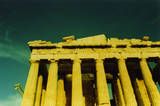
The Corinthian order was the most ornate form of ancient Greek architecture. This style had a delicate capital, often decorated with intricately carved acanthus leaves. The Corinthian order was used in grand structures, such as the Parthenon in Athens.
The ancient Greeks also developed the use of arches and domes in their architecture. The earliest examples of arches are found in the Treasury of Atreus at Mycenae. This structure employed a corbel arch, which was used to create a series of domed chambers. The Romans later adopted the use of arches and domes, and these features can be seen in many of their buildings.
Religion and Technology in the Classical world
Religion and technology have been intertwined throughout the classical world, even as far back as 600 BCE. In ancient Greece and Rome, religion was at the core of everyday life, and it played a major role in the development of technology. Ancient Greeks believed that the gods and goddesses had a direct influence on their lives and on the technology they created. As such, many of their inventions were seen as a way of honoring the gods and goddesses.
The Greeks and Romans developed many innovative technologies that had religious implications. They created machines to aid in their worship of the gods, such as the aeolipile which was a steam-powered rotating sphere used to honor the Greek god Hephaestus. They also developed tools for agriculture, such as the plow and the irrigation system, both of which were seen as a way of giving thanks to the god of agriculture, Demeter.
The Romans also developed some of the earliest forms of engineering and architecture. They created aqueducts, bridges, and roads that allowed them to better worship their gods. The design of their temples, such as the Parthenon, was intended to honor the gods and goddesses of the classical world.Technology also played a role in the spread of religious beliefs in the classical world. In the ancient Near East, for example, the invention of writing allowed for the codification of religious practices and the spread of religious ideas and stories. The development of the alphabet and the printing press allowed for religious texts to be disseminated to a wider audience. Additionally, the proliferation of the written word enabled religious practices to be codified and organized in a manner that was more accessible to a wider range of people.
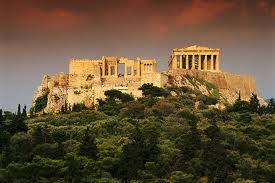
Classical sites are archaeological sites, ruins, or monuments that are related to the classical period of ancient Greece and Rome. These sites are typically a source of great historical and archaeological interest. They include ancient cities and towns, temples, theatres, amphitheatres, aqueducts, monuments, and other structures of the classical period. The most famous classical sites include the Acropolis in Athens, the Parthenon, the Colosseum in Rome, the Temple of Apollo at Delphi, the Mausoleum at Halicarnassus, and the ruins of Pompeii. These sites offer a glimpse into the past and provide an insight into the culture and history of the classical period.
The Acropolis of Athens is an ancient citadel located on a high rocky outcrop above the city of Athens. It is home to several monuments of immense cultural and architectural significance, including the Parthenon, the Erechtheion, the Temple of Athena Nike, and the Propylaea. It is an iconic symbol of ancient Greek civilization and has become an iconic symbol of Western civilization.
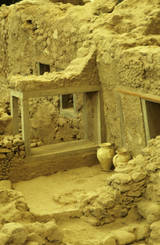
Akrotiri is a Minoan Bronze Age settlement located on the volcanic Greek island of Santorini (Thera). It is believed to have been founded in the late 17th century BC, making it o
ne of the oldest settlements in the Aegean. The settlement was destroyed by an eruption of the volcano in the mid-17th century BC, leaving a deep layer of ash and pumice that buried and preserved the site. The excavation of Akrotiri in 1967 revealed a remarkably well-preserved Bronze Age town, with frescoes, pottery, tools, and furniture, all preserved by the volcanic ash. The site has yielded important insights into Minoan culture and has been compared to the ancient city of Pompeii.
Argos is a retail company based in the United Kingdom. It is part of the Sainsbury's Group, and is one of the largest general merchandise retailers in the country. It offers a wide range of products, including technology, furniture, toys, clothing, and more. It also offers services such as click and collect, store locator, same-day delivery, and finance services.
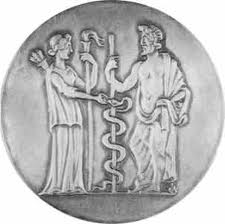
Asklepios is a Greek god of healing and medicine. He is the son of Apollo and Coronis, and he is often depicted as a bearded man holding a staff with a snake wrapped around it. He is the patron of medicine and physicians, and is said to have founded the Asklepieion, the first healing temple in Greece. He is also associated with the healing power of dreams and was often invoked by the sick and injured to bring them health and relief.
Athens is the capital and largest city of Greece. It is one of the most ancient cities in the world, with a recorded history spanning more than 3,400 years. Athens is home to two UNESCO World Heritage Sites, the Acropolis of Athens and the medieval Daphni Monastery. It is also home to the modern Acropolis Museum, the National Archaeological Museum, the Benaki Museum, the Byzantine and Christian Museum, and the Museum of Cycladic Art. Popular attractions in Athens include the Ancient Agora, the Roman Agora, the Temple of Olympian Zeus, the Panathenaic Stadium, the Acropolis Museum, the National Archaeological Museum, and the Benaki Museum.
Classical archaeology involves the study of the ancient cultures of Greece, Rome and their surrounding regions. Issues include the preservation of ancient sites, the interpretation of artifacts, the interpretation of ancient texts, and the role of archaeology in understanding the development of the ancient world. Additionally, there is debate over the ethics of archaeological excavation and the destruction of sites, and the impact of tourism on archaeological sites.
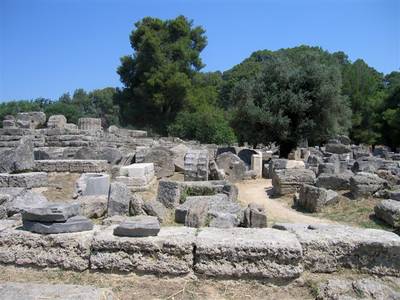
Begin your tour at the Temple of Zeus, one of the most famous monuments of ancient Olympia. Built in the 5th century BC, the temple housed a 12-meter-tall statue of the god Zeus. Then, head to the Temple of Hera, where the Heraean Games were held in honor of the goddess Hera. Explore the ancient stadium, where the Olympic Games were held every four years. Don't forget to visit the Palaestra, where athletes practiced wrestling, boxing and athletics. Also, don't miss the Archaeological Museum of Olympia that features artifacts from the site, including sculptures, pottery and jewelry. Finally, visit the Ancient Theater of Olympia, where plays and musical performances were held.
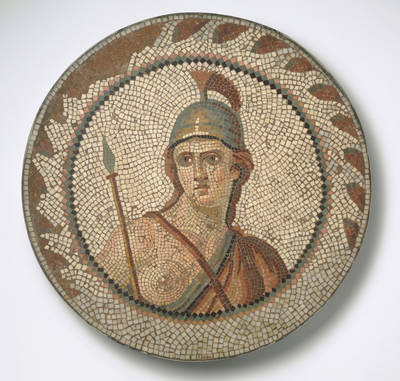
Roman mosaics are a type of artwork that has been used since ancient times to adorn the floors of homes, public buildings, and places of worship. Jewish mosaics are a special type of Roman mosaic that have been used to decorate synagogues and other places of worship in the Jewish faith. These mosaics usually contain images and symbols that are meaningful to the Jewish community and its religious beliefs. Examples of common symbols found in Jewish Roman mosaics are pomegranates, menorahs, the Star of David, and the Ten Commandments. Jewish Roman mosaics are a beautiful way to honor the faith, culture, and history of the Jewish people.
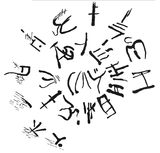
Linear A is a form of writing used in the Minoan civilization of Bronze Age Crete, which flourished from approximately 2000 to 1400 BC. It is named after the linear way of writing, which is a form of script consisting of simple lines and shapes. Linear A was the primary form of writing used in the Minoan civilization, and it is believed to have been used for administrative purposes. The language written in Linear A has not yet been deciphered, though it is believed to be related to the later Linear B.
Linear B is an ancient script used by the Mycenaean civilization of Bronze Age Greece. It was used mainly by the administrative and religious elite of the civilization and is the earliest known form of Greek writing. Linear b is written in a syllabary, a writing system in which each symbol represents a syllable. It was deciphered in 1952, allowing scholars to read the texts written in the script. These texts provide information on Mycenaean history, religion, and culture.
The Archaeological Institute of America (AIA) is a great resource for classical archaeology. The AIA provides information about the latest archaeological discoveries, events, and publications in the field of classical archaeology. Additionally, the AIA has an extensive library which houses a wide range of archaeological books, articles, and other resources. The AIA also offers an online forum where members can discuss topics related to classical archaeology in an open and friendly environment. Finally, the AIA hosts a variety of conferences and workshops on classical archaeology throughout the year, providing opportunities for individuals to learn more about the field and meet other professionals in the field.
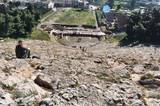
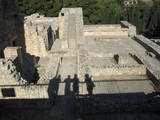
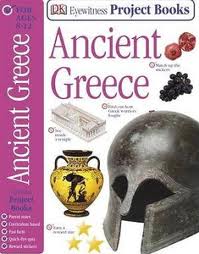
Greece has a rich archaeological history that stretches back to the Neolithic period (7000–3000 BCE). It is home to some of the most impressive archaeological sites in the world, such as the Acropolis in Athens, the Palace of Knossos on Crete, the theatre of Epidaurus, the Temple of Apollo at Delphi and the ancient city of Olympia. Greek archaeology covers a wide range of topics, from the emergence of the first farming societies in the Aegean to the rise and fall of classical Greek civilization. It also includes the study of the many different cultures which have occupied the region over the centuries, such as the Minoans, Mycenaeans, Dorians and Macedonians.
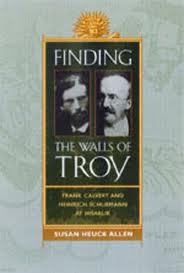
The exact location of the legendary walls of Troy has long been a subject of debate in the archaeological community. While the general area is known to be close to the town of Hisarlik, in modern-day Turkey, the exact location of the walls remains unknown.
Recent archaeological evidence suggests that the walls of Troy are located near the ruins of Hisarlik. In 2017, a team of archaeologists from the University of Cincinnati conducted a geophysical survey of the area and identified a large fortification wall extending from the coastline to the top of the hill overlooking the city. Other evidence, such as the remains of a large gate and other structures, have been found in the same area, suggesting that this is the location of the walls of Troy.
The destruction of Atlantis is a mythological event that is told in various ancient texts. According to the most popular version, the destruction of Atlantis is attributed to a great flood believed to have occurred around 9500 BC. It is said that the continent of Atlantis sank in the ocean and was destroyed. The exact cause of the destruction is unknown, but some theories suggest that an earthquake or volcanic eruption might have caused the destruction. There is no scientific evidence to support this theory, however.
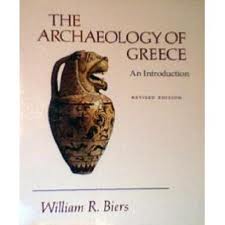
The Archaeology of Ancient Greece is an incredibly rich field of study. From the ancient palaces of the Minoans, the grand cities of the Classical period, and the fortifications of the Hellenistic period, the archaeological evidence of Ancient Greece is vast and varied. Archaeologists have uncovered a wealth of information about the material culture of Ancient Greece, ranging from ceramics, sculpture, and coins to monumental architecture, working tools, and religious artifacts. By studying the physical remains of Ancient Greece, archaeologists can learn about the daily lives of the people, their beliefs, and the development of their society over time.
New Advances in Technology for Studying Classical Archaeology
1. 3D Modelling - 3D modelling can be used to create 3D representations of artifacts or sites, allowing archaeologists to gain a better understanding of how they were used and what they looked like in their original state.
2. Aerial Photography - Aerial photography can be used to photograph sites from the air and reveal features that are not visible to the naked eye. This can help archaeologists to map out sites and better understand their layout and construction.
3. Geophysical Prospection - Geophysical prospection is a technique used to detect subsurface features and remains that are hidden beneath the ground. This can be used to identify structures, buried artifacts, and other features that can provide clues about the past.
4. LiDAR - LiDAR is a remote sensing technology that uses laser pulses to map out the surface of a site. This can be used to create 3D models of sites and reveal features that are not visible from the ground.
5. Remote Sensing - Remote sensing is the use of satellite imagery and other data to gain information about a site. This can be used to identify potential archaeological sites, map out sites, and monitor changes over time.
Rich Resources over the web on Classical Archaeology
Archaeology, or archeology, is the study of human activity through the recovery and analysis of material culture. The archaeological record consists of artifacts, architecture, biofacts and cultural landscapes. Archaeology can be considered both a social science and a branch of the humanities. In North America, archaeology is a sub-field of anthropology, while in Europe it is often viewed as either a discipline in its own right or a sub-field of other disciplines.
Diciplines by Regional study
African Archaeology is the study of the history and prehistory of the African continent, as well as its societies and cultures, through the use of archaeological evidence. African Archaeology covers a broad range of topics, from the Stone Age to the present day.
American Archaeology
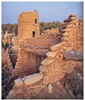
also known as New World archaeology, is the study of the archaeological history and prehistory of the Americas. It is a subfield of archaeology, the study of the human past, which seeks to understand societies and cultures by examining their material culture, such as artifacts and ruins.
European Archaeology
is the scientific study of the material remains of past cultures and societies in Europe, from the Paleolithic period to the present day. It is an interdisciplinary field which draws on the methods and theories of a range of disciplines, including history, anthropology, art history, geography, geology and linguistics.
Medival archaeology is a field of archaeology that is primarily concerned with the material remains of the Middle Ages, which is roughly defined as the period from the 5th to the 15th century.
Near Eastern Archaeology
is the study of the material culture found in the Near East, a region of Eurasia that covers the Middle East, North Africa, and parts of Central Asia. The region is often referred to as the cradle of civilization, as it is the site of some of the earliest known civilizations, including the Sumerian, Babylonian, and Assyrian empires.
Post Medieval Archaeology is the study of the period from the 15th century to the 19th century. It is a period of great change and transformation, with the rise of nation states, the onset of industrialization and the spread of global trade. Archaeological evidence from this period reflects the development of these changes and the impact they had on everyday life.
Modern Archaeology
is the study of human activity in the past using the material remains of a culture. It is a subfield of anthropology that includes the study of artifacts, architecture, landscapes, and cultural landscapes. It is a scientific approach to the study of past cultures and societies, and often involves excavation, laboratory analysis, and other research methods