Computational Archaeology
GreatArchaeology»
Computational archaeology
Computational archaeology describes computer-based analytical methods for the study of long-term human behaviour and behavioural evolution. As with other sub-disciplines that have prefixed 'computational' to their name.the term is reserved for (generally mathematical) methods that could not realistically be performed without the aid of a computer.
Computational archaeology
Computational archaeology may include the use of geographical information systems (GIS), especially when applied to spatial analyses such as viewshed analysis and least-cost path analysis as these approaches are sufficiently computationally complex that they are extremely difficult if not impossible to implement without the processing power of a computer.
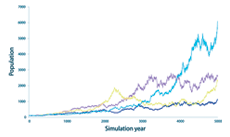
Likewise, some forms of statistical and mathematical modelling, and the computer simulation of human behaviour and behavioural evolution using software tools such as Swarm or Repast would also be impossible to calculate without computational aid. The application of a variety of other forms of complex and bespoke software to solve archaeological problems, such as human perception and movement within built environments using software such as University College London's Space Syntax program, also falls under the term 'computational archaeology'.
Computational archaeology Contains Following Chapter:
In recent years, it has become clear that archaeologists will only be able to harvest the full potential of quantitative methods and computer technology if they become aware of the specific pitfalls and potentials inherent in the archaeological data and research process.
AI science is an emerging discipline that attempts to uncover, quantitatively represent and explore specific properties and patterns of archaeological information. Fundamental research on data and methods for a self-sufficient archaeological approach to information processing produces quantitative methods and computer software specifically geared towards archaeological problem solving and understanding.
AI science is capable of complementing and enhancing almost any area of scientific archaeological research. It incorporates a large part of the methods and theories developed in quantitative archaeology since the 1960s but goes beyond former attempts at quantifying archaeology by exploring ways to represent general archaeological information and problem structures as computer algorithms and data structures.
This opens archaeological analysis to a wide range of computer-based information processing methods fit to solve problems of great complexity. It also promotes a formalized understanding of the discipline's research objects and creates links between archaeology and other quantitative disciplines, both in methods and software technology.
Its agenda can be split up in two major research themes that complement each other:
1. Fundamental research (theoretical AI science) on the structure, properties and possibilities of archaeological data, inference and knowledge building. This includes modeling and managing fuzziness and uncertainty in archaeological data, scale effects, optimal sampling strategies and spatio-temporal effects.
2. Development of computer algorithms and software (applied AI science) that make this theoretical knowledge available to the user.
Scientific progress in archaeology, as in any other discipline, requires building abstract, generalized and transferable knowledge about the processes that underlie past human actions and their manifestations. Quantification provides the ultimate known way of abstracting and extending our scientific abilities past the limits of intuitive cognition.
Quantitative approaches to archaeological information handling and inference constitute a critical body of scientific methods in archaeological research. They provide the tools, algebra, statistics and computer algorithms, to process information too voluminous or complex for purely cognitive, informal inference. They also build a bridge between archaeology and numerous quantitative sciences such as geophysics, geoinformation sciences and applied statistics. And they allow archaeological scientists to design and carry out research in a formal, transparent and comprehensible way.
Being an emerging field of research, AI science is currently a rather dispersed discipline in need of stronger, well-funded and institutionalized embedding, especially in academic teaching. Despite its evident progress and usefulness, today's quantitative archaeology is often inadequately represented in archaeological training and education. Part of this problem may be misconceptions about the seeming conflict between mathematics and humanistic archaeology.
The most important platform for students and researchers in quantitative archaeology and AI science is the international conference on Computer Applications and Quantitative Methods in Archaeology (CAA) which has been in existence for more than 30 years now and is held in a different city of Europe each year. Vienna's city archaeology unit also hosts an annual event that is quickly growing in international importance.
As a general rule, the archaeological job market has insufficient capacities to offer employment for all of the subject's graduates. Training in AI science will provide students with knowledge and skills related to a number of key qualifications and technologies that are sought for in many sectors of today's job market.
In archaeology itself, prospective fields of work include heritage management, archaeological IT consulting and software development, digital excavation management, digital archives and museums, digital publishing (e.g. Internet Archaeology), and teaching and training quantitative archaeologists.
Books on the Computational archaeology :
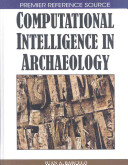
Computational intelligence in archaeology - Juan A. Barcelo,IGI Global snippet, 2009
This book provides analytical theories offered by new and innovative artificial intelligence computing methods in the archaeological domain. This stimulating, must-have title is full of archaeological examples that allow academicians, researchers.
Archaeological Prospecting and Remote Sensing
Archaeological Prospecting and Remote Sensing surveys some of the highly ingenious non-destructive methods for detecting and mapping remains of ancient cultures that have vanished from the modern surface. Techniques include low-level air photography, magnetic, thermal, electric, and electromagnetic geophysical prospecting.
Rich Resources over the web on Computational archaeology