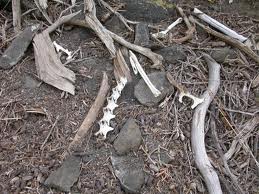
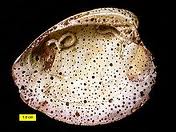
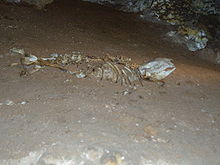
Taphonomy is the study of the processes of fossilization and the changes in organisms that occur after death. It is the study of the transformation of organic materials into fossils in the natural environment. Taphonomy studies the processes of decay, transport, and deposition of organic remains in the environment and how these processes affect the preservation of organisms. It is an important part of paleontology, as it helps to explain the fossil record.
The process of fossilization begins with the death of an organism. After death, the organism may be subject to physical and chemical changes, such as decomposition, scavenging, and transportation.
Decomposition is the breakdown of the organism by bacteria, fungi, and other organisms that utilize the organic material for energy. Scavenging is the removal of the organism or parts of it by other animals, such as insects, fish, or birds. Transportation is the movement of the organism or parts of it by water or wind, which can lead to the organism being deposited in a different environment than it was originally in.
These processes affect the preservation of the organism's remains. Physical changes, such as fragmentation, weathering, and abrasion, can lead to the destruction of the remains. Chemical changes, such as oxidation, can also degrade the remains. Some remains may be preserved and fossilized due to the presence of mineral-rich water or sediment, which can replace the original organic material and preserve the shape of the organism.
Taphonomy can also be studied in the laboratory, where researchers can simulate the conditions of fossilization by replicating the environment in which the fossils were found. This allows researchers to study the effects of physical and chemical changes on the fossilized remains.Taphonomy is an important part of paleontology, as it provides valuable insight into how the fossil record was formed. By studying the processes of fossilization and the changes that occur after death, researchers can learn more about the history of life on Earth and the environment in which the organisms lived.
The Role of Taphonomy in Archaeology
Taphonomy is the study of how the physical remains of organisms are preserved and altered over time. In archaeology, taphonomy can be used to understand the formation of archaeological sites, to interpret the environment in which the artifacts come from, and to interpret the behavior of the people who left the artifacts.Taphonomic studies can help archaeologists to better understand the formation of archaeological sites, to determine the age of the artifacts, and to identify the activities of the people who left the artifacts. By studying how the artifacts were preserved over time, archaeologists can learn more about the environment they come from, the activities that occurred in that area, and the people who left the artifacts.
Taphonomy can also be used to help identify the cultural context of a site, to determine the relationships between different artifacts, and to interpret the behavior of the people who left the artifacts. By studying the condition of the artifacts and the manner in which they were deposited, archaeologists can gain insight into the activities that occurred in the past and the cultural context in which they were created.
Taphonomic studies can also help archaeologists to reconstruct past environments and to understand the processes of cultural change. By studying the formation of archaeological sites, the composition of the artifacts, and the environmental conditions in which the artifacts were deposited, archaeologists can gain a better understanding of the environmental conditions in the past and how they may have changed over time.
Overall, taphonomy is an important tool in the study of archaeology. By studying the formation of archaeological sites, the composition of the artifacts, and the environmental conditions in which they were deposited, archaeologists can gain a better understanding of the pastand how people interacted with their environment.
The Significance of Taphonomy in Paleontology
Taphonomy is a field of study in paleontology that focuses on the post-mortem processes of organisms and their remains, from the moment of death until their eventual discovery. Taphonomic analysis is the study of how these processes affect the preservation of organic remains and their distribution in the fossil record. Taphonomy is important in paleontology because it provides insights into the ecology of ancient organisms, their behaviour, and the environment in which they lived, as well as the processes that formed the fossil record itself.
Taphonomic processes can include physical and chemical changes to the remains of organisms, such as weathering, decomposition, abrasion, and scavenging. Physical processes cause the remains to break down and be dispersed, while chemical processes alter the composition of the remains. For example, chemical weathering can break down bone and produce a mineralized version of the former organic material, while abrasion can wear away delicate features such as feathers or scales. Taphonomic processes can also cause the remains of organisms to be moved around, and re-deposited in different locations.
Taphonomy is important to paleontologists because it helps them to interpret the fossil record. By understanding the various taphonomic processes that have acted upon the remains of ancient organisms, paleontologists can better understand the environment in which those organisms lived and the behaviour that they engaged in. For example, the presence of scavenger marks on a fossil can provide insight into the types of organisms that lived in the area, and the presence of abrasion marks can indicate the presence of currents that carried the remains away from the original site of death.
Taphonomy is also important to paleontologists because it helps to explain the incompleteness of the fossil record. Taphonomic processes can cause the destruction or fragmentation of fossils, or the movement of remains away from the original site of deposition. This can lead to an incomplete fossil record, which can make it difficult for paleontologists to understand the ecology of an ancient organism or the environment in which it lived.
Taphonomic biases in the fossil record refer to the processes which can affect the preservation and representation of fossils in the fossil record. These processes can include post-mortem transport, differential destruction of fossils, and the preservation of certain types of organisms over others. This can lead to a bias in the fossil record which can lead to an incomplete and inaccurate view of the prehistoric world.
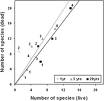
Spatial fidelity is a measure of the accuracy of a sound reproduction system. It is the ability of a system to accurately reproduce all sounds in the same space or environment as they were originally recorded. It is a measure of how accurately the system can recreate the original acoustic environment.
Spatial fidelity is important in audio recordings, because it allows the listener to accurately hear the original sound as it was recorded. This helps to preserve the intended sound of the original performance, allowing the listener to experience the true sound of the performance.
Spatial fidelity can be determined by measuring the frequency response of the system, which is the ability of the system to accurately reproduce the frequencies of a sound.
It can also be measured by examining the phase response, which is the ability of the system to accurately reproduce the timing of a sound.
In order to achieve high-fidelity sound reproduction, the system must be designed to accurately reproduce all the components of a sound, such as frequency, amplitude, and phase. This can be achieved by using high-quality components, such as speakers, amplifiers, and digital-to-analog converters.
In conclusion, spatial fidelity is an important measure of sound reproduction accuracy. When a system has good spatial fidelity, it is able to accurately reproduce the original sound as it was recorded, allowing the listener to experience the original performance as it was intended.
Temporal resolution is a measure of how detailed or precise a temporal reference is. It is the ability to distinguish between different points in time, often expressed as a unit of time. Temporal resolution is an important concept in many areas of science, engineering, and technology, including the study of biological phenomena and the development of systems that use temporal information.
In physics, temporal resolution is used to measure the accuracy of a physical system's measurement of time. For example, the temporal resolution of a clock is typically measured in nanoseconds, or billionths of a second. This is the smallest unit of time that a clock can measure. In astronomy, temporal resolution is used to measure the accuracy of observations of stellar objects and other astronomical phenomena. For example, the temporal resolution of an astronomical telescope is typically measured in seconds or minutes, depending on the telescope's size and capabilities.
In biology, temporal resolution is used to measure the accuracy of a biological system's measurement of time.
This includes the measurement of biological processes such as metabolic cycles, cellular signaling pathways, and gene expression. For example, the temporal resolution of a cell or tissue is typically measured in milliseconds or seconds, depending on the size and complexity of the system being studied.
In technology, temporal resolution is used to measure the accuracy of a computer program's measurement of time. This includes the measurement of events and operations, such as the time taken for a computer to perform a task or the time taken for a computer to process a command. For example, the temporal resolution of a computer program is typically measured in milliseconds or microseconds, depending on the complexity of the program.
Temporal resolution is essential for understanding and interpreting temporal data. It is also important in the development of systems that rely on temporal information, such as medical devices, communications systems, and robotics. By understanding the temporal resolution of a system, engineers and scientists can design systems that are more accurate and efficient, leading to advances in a wide range of fields.
Compositional fidelity refers to the accuracy and consistency with which a composition is reproduced. It is a measure of how closely the reproduced product resembles the original composition. This could be in terms of sound or visual elements such as colour, texture, and structure.
Compositional fidelity is important in many areas, such as digital music production, film and photography. In digital music production, the aim is to achieve a composition that is as faithful to the original as possible.
This includes preserving the dynamics, nuances, and tone of the original recording. In film and photography, compositional fidelity is important for creating a realistic representation of a scene. This includes capturing the right colours, textures, and shapes of the environment.
Compositional fidelity can be improved by using better equipment, such as higher quality microphones for music production or more powerful cameras for photography. It can also be improved by using post-production techniques such as EQ, compression, and reverb to refine the sound or image. Finally, quality control measures can be taken to ensure that the final product is of the highest quality.
Overall, compositional fidelity is a key measure of the quality of a composition and is essential for achieving realistic and accurate representations.
Time series are data sets consisting of a sequence of observations over a period of time. They are often used in the fields of economics, finance, engineering, and medicine to study trends, make predictions, and analyze the behavior of systems.
Time series completeness is a measure of the completeness of the data set. It assesses how much of the data is actually available for study. The completeness of a time series is determined by the number of observations available, the frequency of the observations, and the quality of the data.
A complete time series is one in which all of the observations are available, and the observations are made at regular intervals. This ensures that the data set accurately reflects the behavior of the system. On the other hand, an incomplete time series may contain gaps or missing data points, resulting in an inaccurate representation of the system.
In order to achieve time series completeness, the data set should be regularly monitored. This can be done by using software tools that track the frequency and quality of the data points. Additionally, data points should be checked for accuracy and consistency to ensure that the results are valid.
Time series completeness is an important factor when it comes to understanding the behavior of a system and making accurate predictions. Without complete data sets, the accuracy of predictions can be greatly diminished, leading to inaccurate results. As such, it is important to ensure that time series data sets are complete and accurate before making any decisions based on the data.
Research areas
1. Natural Language Processing: Natural language processing (NLP) is a branch of artificial intelligence that deals with the understanding, manipulation, and generation of natural language. This field has grown rapidly in recent years and has numerous applications from improving customer service to developing virtual assistants.
2.Machine Learning: Machine learning uses algorithms to learn from data. It is used to develop predictive models and make decisions without explicit programming. It has become increasingly popular in a variety of fields, such as computer vision, robotics, and finance.
3. Computer Vision: Computer vision is the field of study that aims to understand how computers can interpret and understand visual data. It has a variety of applications, including facial recognition, object recognition, and medical imaging.
4. Robotics: Robotics is the field of engineering that deals with the design and development of robots and other automated systems. It has numerous applications, such as manufacturing, search and rescue, healthcare, and military operations.
5. Data Mining: Data mining is the process of extracting patterns and knowledge from large datasets. It is used in a variety of industries to uncover trends and make predictions.
The Use of Technology to Study Taphonomic Processes
Taphonomy refers to the study of how biological materials decay and how they are preserved over time. It is a field of study that has been around for centuries but has been greatly enhanced by the use of modern technology. Technology has allowed researchers to look at taphonomic processes in a much deeper and more detailed way than ever before.
degradation of fossilsor other biological materials and to assess the effects of various taphonomic processes.
Another way that technology has been used to study taphonomic processes is through the use of 3D imaging. 3D imaging allows researchers to create detailed 3D models of fossils or other biological materials in order to better understand how they decay over time. This technology can be used to monitor the rate of decay of different materials and to compare the decay rates of different species or environments.
In addition to the use of remote sensing and 3D imaging, technology has also been used to study taphonomic processes through the use of computer simulations. Computer simulations can be used to model the effects of different taphonomic processes on the preservation of biological materials. This technology can be used to predict how different materials may decay in different environments or over different time periods.
Finally, technology has been used to study taphonomic processes through the use of DNA analysis. DNA analysis can be used to study the genetic makeup of different organisms and to determine how the composition of these organisms may have changed over time due to taphonomic processes. This technology can be used to study the relationship between different species and to understand how the environment has changed over time.
Overall, technology has become an invaluable tool for researchers studying taphonomic processes. Through the use of remote sensing, 3D imaging, computer simulations, and DNA analysis, researchers can gain a much deeper understanding of how different materials decay and are preserved over time. This knowledge can then be used to better protect and preserve the fossil record and to help scientists understand the history of life on Earth.
Human biases
Human biases are mental shortcuts that people use to make decisions or form judgments about situations. They are often unconscious and can lead to inaccurate conclusions. Examples of human biases include confirmation bias (seeking out information that confirms existing beliefs), availability bias (assigning greater weight to information that is more easily accessible), and anchoring bias (an overreliance on one piece of information to make a decision). Human biases can lead to decisions that are not necessarily accurate or fair, and can be detrimental to a person's ability to make sound decisions.
Taphonomy is the study of the processes of decay and burial of organisms over time and how they may affect the fossil record. It is an interdisciplinary field, incorporating information from the fields of geology, biology, archaeology, paleontology, and anthropology. Taphonomy is a critical component of the field of paleontology, as it helps to explain the formation of the fossil record and how it is affected by the environmental conditions at the time of death, transport, and burial. It is also important to archaeology, as it can provide insights into the past environments and the processes that led to the formation of archaeological sites.
Taphonomy in Britannica:
Taphonomy is the study of how organisms decay and the processes by which their remains become incorporated into sedimentary deposits. It is a branch of paleontology and also a subfield of forensic anthropology. Taphonomic processes can be divided into three categories: biological (the action of living organisms), physical (the action of non-living agents) and chemical (the action of chemical agents). Taphonomic processes are usually studied in relation to fossils, but they are also important for understanding the preservation of artifacts and the formation of sedimentary deposits. Taphonomy has applications in a variety of fields, including archaeology, geology, ecology, and paleontology.
Diciplines by Regional study
African Archaeology is the study of the history and prehistory of the African continent, as well as its societies and cultures, through the use of archaeological evidence. African Archaeology covers a broad range of topics, from the Stone Age to the present day.
American Archaeology also known as New World archaeology, is the study of the archaeological history and prehistory of the Americas. It is a subfield of archaeology, the study of the human past, which seeks to understand societies and cultures by examining their material culture, such as artifacts and ruins.
European Archaeology
is the scientific study of the material remains of past cultures and societies in Europe, from the Paleolithic period to the present day. It is an interdisciplinary field which draws on the methods and theories of a range of disciplines, including history, anthropology, art history, geography, geology and linguistics.
Medival archaeology is a field of archaeology that is primarily concerned with the material remains of the Middle Ages, which is roughly defined as the period from the 5th to the 15th century.
Near Eastern Archaeology is the study of the material culture found in the Near East, a region of Eurasia that covers the Middle East, North Africa, and parts of Central Asia. The region is often referred to as the cradle of civilization, as it is the site of some of the earliest known civilizations, including the Sumerian, Babylonian, and Assyrian empires.
Post Medieval Archaeology is the study of the period from the 15th century to the 19th century. It is a period of great change and transformation, with the rise of nation states, the onset of industrialization and the spread of global trade. Archaeological evidence from this period reflects the development of these changes and the impact they had on everyday life.
Modern Archaeology is the study of human activity in the past using the material remains of a culture. It is a subfield of anthropology that includes the study of artifacts, architecture, landscapes, and cultural landscapes. It is a scientific approach to the study of past cultures and societies, and often involves excavation, laboratory analysis, and other research method