Baruch Bulla
Archaeology Review»
Archaeological Discoveries »
Baruch Bulla
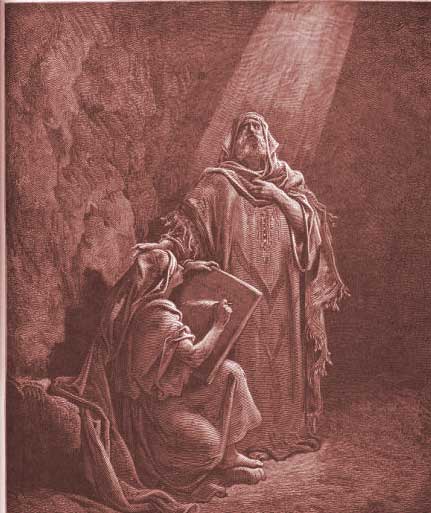
Baruch Bulla (or Baruch ben Neriah) was a scribe and prophet in ancient Israel who wrote the Book of Jeremiah. He is mentioned in the Bible in Jeremiah 32:12 and in other non-biblical sources. He was born to Neriah, the father of Jeremiah, and was likely raised in Jerusalem. He was the younger brother of Jeremiah, and served as his scribe, writing down his prophetic words. He was also sent on a mission to King Zedekiah of Judah to deliver Jeremiah's message to him. He took part in the fall of Jerusalem and the Babylonian Exile, and is believed to have been part of the group of exiles who returned to Jerusalem with Ezra. He is also believed to have written other books, such as the Book of Baruch, which may have been written after the Exile. He is an important figure in Judaism, and is remembered for his role in preserving the words of the prophets.
Baruch Bulla was a Jewish man who lived in the early 19th century in Jerusalem. He was a successful businessman, and a respected leader in the Jewish community. His family had been in Jerusalem since the early 1700s and he was a descendant of a prominent rabbinic family.
Bulla was involved in various public activities including teaching, organizing religious ceremonies, and helping to establish a Jewish court of law. He was also a philanthropist, donating generously to various Jewish charities and causes.
Bulla was also an advocate for Jewish rights in Palestine, and worked to improve relations between the Jewish and Arab communities. He was a founding member of the Alliance Israelite Universelle, an organization devoted to promoting the rights of Jews throughout the world. He was also active in Jewish politics, and was a member of the Vaad HaKehilot (Council of Jewish Communities) in Palestine.
Bulla's legacy lives on today. He is remembered as a leader in the Jewish community and an advocate for Jewish rights in Palestine. His philanthropic efforts are still celebrated in Jerusalem, and he is honored in the city's annual parade.
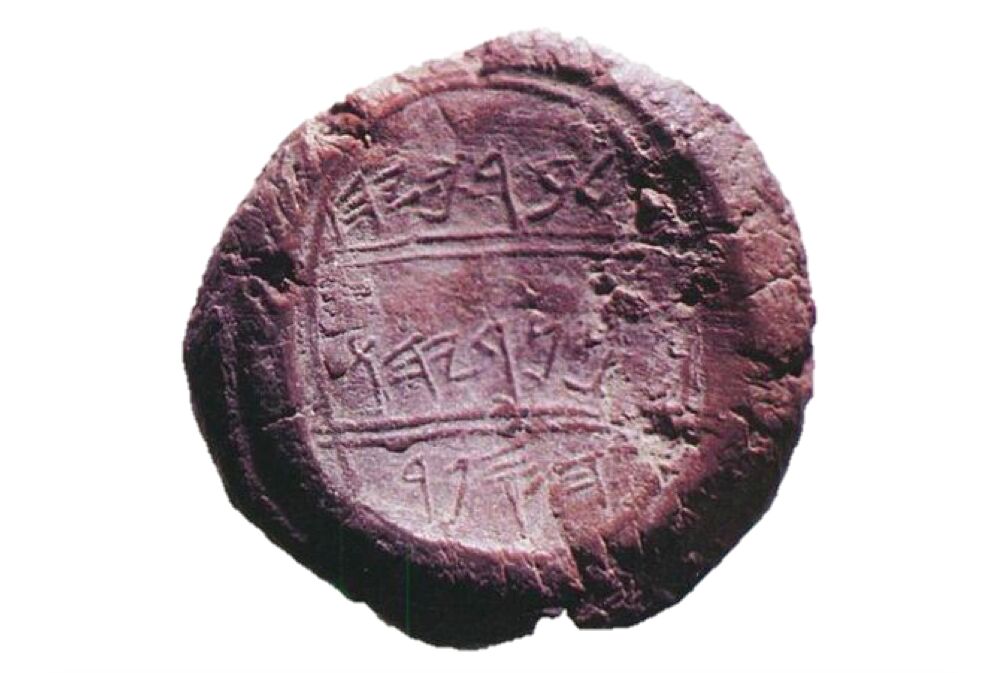
Books Related to Baruch Bulla
Baruch Bulla was a prominent Jewish scholar of the 19th century who had a profound influence on Jewish thought and culture. He was born in Lithuania and moved to Warsaw, where he studied Talmudic literature. Bulla became an influential rabbi and was known for his rigorous and thorough analysis of Jewish texts. He wrote several books on Jewish law and theology, and his work was widely respected by both religious and secular Jews.
Bulla was a major proponent of the Haskalah, or Jewish Enlightenment. Through his writings, he advocated for the adoption of modern scientific and philosophical thought in Judaism. He argued that Jewish tradition and culture could be reconciled with modern ideas, and that Judaism should embrace the modern world. He also encouraged Jews to become more active in the public sphere and to engage in cultural and political life.
Bulla was an ardent proponent of religious tolerance and interfaith dialogue. He argued that religious differences should be embraced, and that all religions should be respected. He argued against viewing other religions as "false" and advocated for a more open and tolerant attitude towards them. He also argued for a more inclusive approach to Jewish life, encouraging Jews to embrace those of other faiths.
Bulla's work had a lasting impact on Jewish thought and culture. His writings were influential in the development of Reform Judaism, which sought to reconcile modern ideas with traditional Jewish thought. His writings also encouraged Jews to become more active in public life and to engage in interfaith dialogue. His work was also influential in the development of Jewish education, particularly in the area of Talmudic studies. His writings helped to establish the field of modern Jewish scholarship and were a major influence in the development of Jewish thought and culture.
An Analysis of Baruch Bulla's Writings and Teachings :
- Baruch Bulla is an internationally renowned Torah scholar and teacher who has written extensively on a wide variety of topics related to Jewish law, philosophy, history, and spirituality.
- His writing is characterized by a deep and nuanced understanding of the underlying principles of Jewish tradition as well as a commitment to engaging with modern society.
- One of the most important themes in Bulla's writing is the importance of studying and understanding the Talmud. He emphasizes the importance of studying the Talmud to gain a better understanding of the Jewish tradition and to be able to more effectively engage with modern society. He also stresses the importance of engaging with the diverse opinions present in the Talmud, rather than adopting a strict and narrow interpretation of the text.
- Bulla also frequently writes about the importance of studying the texts of Jewish mysticism, such as the Zohar and Sefer Yetzirah. He emphasizes the need to understand the spiritual and metaphysical aspects of Judaism, rather than relying solely on the more legalistic aspects of the tradition.
- In addition to his writings on the Talmud and Jewish mysticism, Bulla also frequently writes about ethical and moral issues, such as social justice and the obligation to care for others.
- He stresses the importance of living a life of righteousness and compassion and of acting in accordance with the highest ethical standards.
-
Bulla's writings also emphasize the importance of connecting to the spiritual aspects of Judaism. He often writes about the need to cultivate a sense of gratitude and appreciation for the blessings in our lives, and to cultivate a sense of awe and reverence for the divine.
- He also stresses the importance of connecting to the divine through prayer and meditation.
- Baruch Bulla's writings and teachings demonstrate a deep commitment to engaging with the Jewish tradition in a meaningful and nuanced way.
- His writings emphasize the importance of studying the Talmud and Jewish mysticism, while also stressing the importance of living a life of righteousness and compassion. Furthermore, his writings emphasize the need to connect to the spiritual aspects of Judaism.
Archaeologists related to the finding of Baruch Bulla
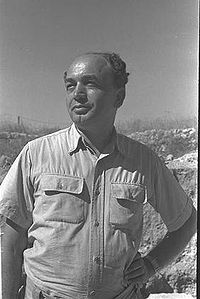
Avigad studied architecture in what is now the town of Brno, Czech Republic. Avigad emigrated to Mandatory
Books Related to Baruch Bulla
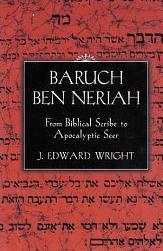
Baruch ben Neriah: From Biblical Scribe to Apocalyptic Seer by J. Edward Wright
In this comprehensive assessment of Baruch, J. Edward Wright charts the significance of a minor figure who gradually became a larger-than-life hero in the Jewish and Christian popular imagination.
Identifying Biblical Persons in Northwest Inscriptions of 1200-539 B.C.E. by Lawrence J. Mykytiuk.
It has been updated through mid-2002 briefly evaluate potential identifications of over seventy-five biblical persons in over ninety Northwest Semitic inscriptions that are mostly contemporary with the person.
Rich Resources on Baruch Bulla
Biblical Archaeology Review (BAR) is kept in the Magazine Stacks of Golden Library.It is also stocked by many public libraries, and should be available on Inter-Library loan.
Important archaeological Discoveries
Amesbury ArcherAmesbury Archer (or King of Stonehenge) is an early Bronze Age man, dating to around 2300 BC. His grave is of particular importance because of the rich valuables and the earliest gold objects ever found in England.
Otzi the Ice mummyOtzi the Iceman is well naturally preserved mummy of a man. The man who was been captured in Ice was believed to be over 53 centuries old (3300 BC).
Java ManJava man is an interesting discovery to note that the find was not a complete specimen, but consisted merely of a skullcap, a femur, and three teeth. Many scientists of the day even suggested that Dubois' Java Man might have been the so-called "
missing link
Kennewick ManKennewick Man is the name for the remains of a prehistoric man found on a bank of the Columbia River near Kennewick, Washington, on July 28, 1996. The Kennewick Man news story is one of the most significant archaeology stories of contemporary times.
Neanderthal ManNeandertal1 or Neanderthal was a species of genus Homo (Homo neanderthalensis) that inhabited Europe and parts of western Asia during the last ice age.
Peking ManPeking Man (sometimes now called Beijing Man), also called Sinanthropus pekinensis (currently Homo erectus pekinensis), is an example of Homo erectus.
Red lady of PavilandThe Red Lady of Paviland is a fairly complete Upper Paleolithic-era human male skeleton dyed in red ochre, discovered in 1823 by Rev. William Buckland in one of the Paviland limestone caves of the Gower Peninsula in south Wales, dating from c29,000.
Tollund ManThe Tollund man lived during the late 5th century BC and/or early 4th century BC, about 2,400 years . He was buried in a peat bog on the Jutland Peninsula in Denmark, a find known as a bog body.
Turkana BoyTurkana Boy, the designation given to fossil KNM-WT (Kenya National Museum-West Turkana), is a nearly complete skeleton of a 12-year-old hominid boy who died 1.6 million years ago.Turkana Boy is classified as either Homo erectus or Homo ergaster.
Dead Sea scrollsThe Dead Sea Scrolls are a collection of about 850 documents, including texts from the Hebrew Bible, which were discovered in eleven caves near Qumran, in a fortress northwest of the Dead Sea in Israel.
Narmer PaletteThe Narmer Palette, or Great Hierakonpolis Palette, is a significant Egyptian archeological find, dating from about 3200 BC, containing some of the earliest hieroglyphic inscriptions ever found, and depicting the unification of Upper and Lower Egypt under Narmer.
Rosetta StoneRosetta Stone is a dark granite stone (often incorrectly identified as "basalt") which provided modern researchers with translations of ancient text in Egyptian demotic script, Greek, and Egyptian hieroglyphics.
Linear BLinear B is the script that was used for writing Mycenaean, an early form of the Greek language. It occurrs primarily on tablets dated from the 14th and 13th centuries BC.
Sweet trackThe Sweet Track is an ancient roadway in the Somerset Levels, England. As of the early 2000s, it is the oldest known engineered roadway in the world. An grand footpath that ran for almost 2km across the Somerset levels swamps.
Tautavel ManTautavel Man is an ancestor of Neanderthal man, was slightly different from his contemporaries living Asia and Africa. In the village of Tautavel is located in the South of France, one of the most ancient humans was found: the Tautavel Man.
Galilee BoatThe
Galilee Boat which is also referred as the "Jesus Boat" was found by local
Galilean inhabitants in January 1986. The boat was wrapped in a polyurethane shell and then immersed in a special tank of water to avoid quick disintegration.
Ekron InscriptionThe monumental
Ekron inscription is dated, statistically and historically, to the first half of the seventh century B.C.E. The five lines of the inscription are together with this in a slit open border.
Pontius PilateIt wasn't long back when a lot of scholars were quizzical the real survival of a Roman Governor with the name Pontius Pilate, the procurator who ordered
Jesus' crucifixion. In June 1961 close to Caesarea-on-the-Sea (Maritima) was unearthed this appealing limestone block.
Ossuary of CaiaphasIn 1990 ornately decorate limestone ossuary (bone depository) was found in Jerusalem's Peace Forest. In the ossuary were the bones of two babies, a adolescent child, a teenage boy, an adult woman, and a man about 60years of age.
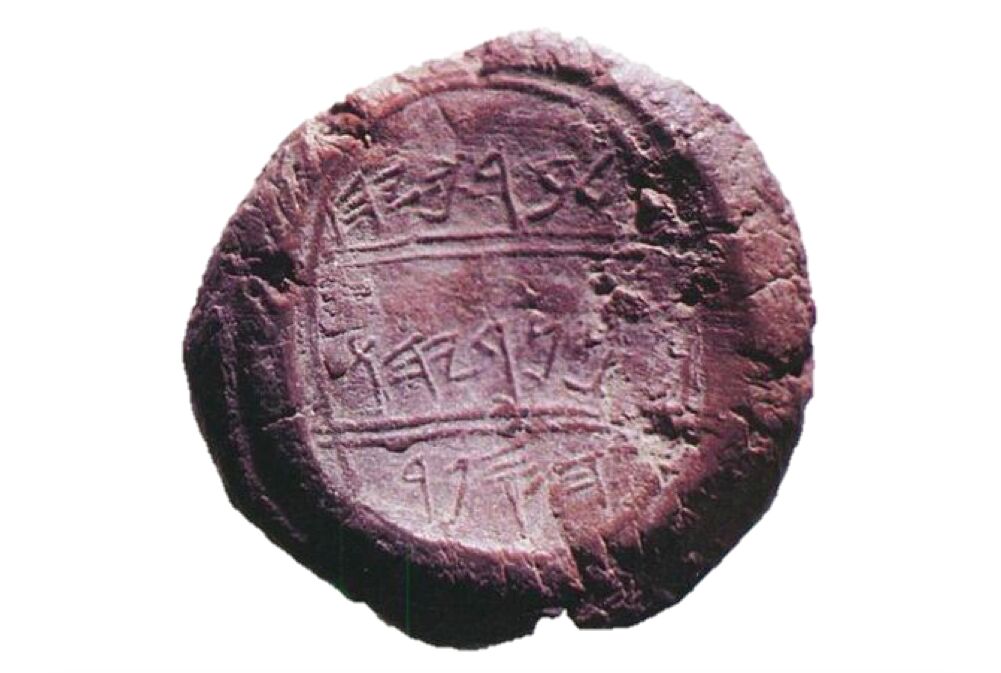
Baruch BullaIn
biblical Israel, papyrus was the main form of writing substance. Once an authorized deed was written, it would be rolled up, one end crinkled in one-third of the width and the contrary end likewise folded in.
Ugarit-Pre historic cityIt is the Capital city of a prehistoric principality in what these days is on the northern part of the Syrian coast, just north of the city of Latakia.