search
Archaeology Discoveries of archaeology History based on archaeology Disciplines of archaeology Region of Studies in archaeology Archaeological related Methods Museum's Collections in Worldwide
Amesbury Archer
Archaeological History >> Important Discoveries of Archaeology >> Amesbury Archer

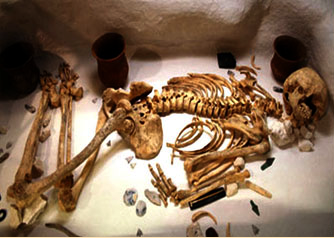
Amesbury Archer (or King of Stonehenge) is an early Bronze Age man. His finding dates to back to 2300 BC. His grave was discovered in May 2002 by the archaeologists from Wessex Archaeology, in Amesbury, WiltShire, England near the Stonehenge. His grave is of particular importance because of the rich valuables and the earliest gold objects ever found in England. Nearly 100 objects were found along with the complete skeleton of the man. It is believed that the objects buried in with his grave was for his use in his next life.

Amesbury Archer

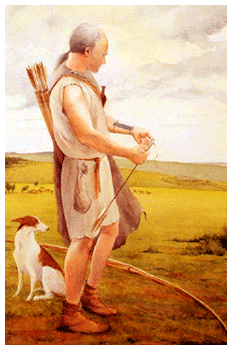
Recent research using lead isotope analysis identified the origin of the man as being Central Europe. He is believed to have been one of the earliest metalworkers in Britain. He is nicknamed the "ARCHER" or "King of Stonehenge" because a longbow was among the artifacts buried with him.

His finding is important as he is

  • First example of a most dominant elite
  • Could have been involved in the Erection of the Stonehenge
  • His grave contained the richest number of items
  • The gold used in his earrings or otherwise would be hair tresses dated back to 2470 BC
Importance Of discovery of Amesbury Archer in ancient archaeology
The Amesbury Archer is important for many reasons. This was a time when the first metals were brought to Britain, and the Archer was buried with two gold hair tresses which are the oldest securely dated gold still found in Britain (dated to around 2,400BC).

The Archer was important for another reason: he was buried three miles from Stonehenge at the very time when the massive stones were being brought to Salisbury Plain in Wiltshire to erect the world-famous monument. The Archer is essential because he is the first example of a powerful elite who may well have organized the erection of Stonehenge.

His grave is of particular importance because of its associates with multicultural Europe and early copper smelting technology. He is trusted to have been one of the earliest metalworkers in Britain.

The Amesbury Archer goes on display
Display of amesbury archer at Salisbury Museum

A permanent display for the Amesbury Archer skeleton and grave goods was built by conservators at the Conservation Service laboratory. The display is planned to represent the burial environment in which the Archer was found and replicates it as far as achievable.

A custom-built case, already in place in the Early Man Gallery at Salisbury & South Wiltshire Museum, houses the final grave display.

The burial consists of a box made from medium density fiberboard (MDF). This has been painted with a coating of a special protective varnish to seal the surface. An aluminum mesh has been clipped to the MDF and padded with acid free tissue behind to represent the uneven nature of the soil in the burial atmosphere. This was then covered with a fabric layer before a layer of plaster was added over the top. This surface was then painted with an acrylic emulsion to represent the grave surface.

The burial was built in two halves so that it could be easily transported to the museum and assembled. It can also be dismantled easily if necessary.The grave will form a permanent display area for the Amesbury Archer in the Early Man Gallery at Salisbury & South Wilts Museum and can be sighted daily.

The First Burial Of Amesbury Archer
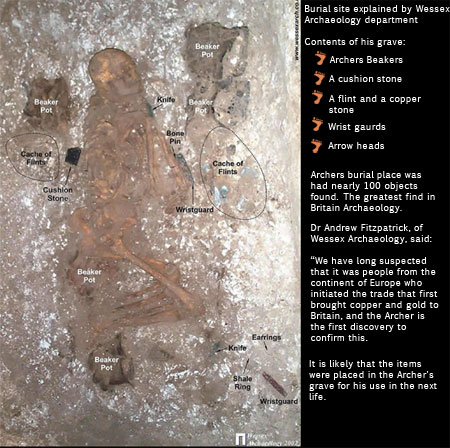
First burial of Amesbury archer with artefacts explained

Amesbury Archer grave had the greatest number of objects ever found in a British Bronze Age burial.

The following are the objects found in burial.

  • Three tiny copper knives, more for illustrate than for violent use.
  • 16 barbed flint arrowheads .Scattered through the grave but at a slightly higher level were 16 barbed and tangled arrowheads. The height at which the arrowheads were found hint that they were lying over the body rather than having been located on the floor of the grave.
  • A kit of flint-napping.

  • And metalworking tools, including cushion stones that purposed as a kind of moveable anvil and that recommend he was a coppersmith and some boar's tusks.
  • On his forearm was a black Stone wrist-guard. A similar red wrist-guard was by his knees. With the second wrist-guard were a shale belt ring and a pair of gold hair ornaments.
The Second burial
Another grave was found close to the Amesbury Archers - Second burial site

Another grave was found close to the Amesbury Archer's.

  • The bones were being cleaned in the laboratory, the discovery of a pair of gold hair tresses inside the man's jaw.
  • The new hair tresses were in the same style as the Archer's.
  • A study of the bones later illustrated that he and the Archer were related as they both had the same extraordinary bone structure in their feet.

Study of the two men's skeletons exposed that they shared an unusual characteristic, but one that was maybe unknown to them.

Some bones at the top of their insteps that are not usually expressed are articulated.

This would not have caused them any problem, but this trait is very rare.

To find two individuals who share it, buried so closely to each other, strongly suggests that they were related.

Radiocarbon dates propose that the second burial is slightly later than the Archer's, but whether they were brothers, cousins, or father and son, is not known.

The Beaker from the grave of the Amesbury Archer
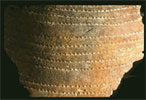
Amesbury Archer Beakers found at the grave

The five Beaker pots from the grave are an outstanding group, both in terms of number of vessels and quality.

No other burial has lots of Beaker pots as grave goods, the most common number of Beakers in a grave being one.

The pair of pots in front of the Archer's face is almost alike.

Both pots are ornamented with horizontal lines of ver fine plaited cord, pressed into the clay when damp. This is a remarkable form of cord decoration in both Britain and Europe.

Weapons Used By Amesbury Archer
Arrowheads sited at Fist burial site

An antler spatula for working flints, another copper knife and more flints - these would have been tools, some in mint condition.

Approximately the archer's waist and legs were 15 arrowheads, signifying that a quiver of hafted arrows had been scattered over his lower body and legs, but the bow had long since rotted away.

It is likely that the items were located in the Archer's grave for his use in the next life. He had everything that a person would need to stay alive - clothing, tools, weapons, pottery and spare flints to make new tools.

Archaeologists Opinion on Amesbury Archer
  • As the archaeologists talk about these questions, further astonishing facts became clear.
  • Some archaeologists have dispute that, for the period in question, there is no certain proof for the sort of social differences that might suggest a ranked culture.
  • The discovery of the burial of the Amesbury Archer and his friend, however, showed for the first time that at this date there were individuals - and maybe even families - of greater wealth and status than others.
  • That these best had ties across Europe is shown by the amazing discovery that the Archer comes from central Europe.
Archaeologists contributing to the Amesbury archer Project
Alison Sheridan

Alison Sheridan is Head of Early Prehistory in the National ...
Mike Parker Pearson

The monument Bluehenge was discovered by Professor Mike Parker Pearson He ...
Books Related to Amesbury Archer
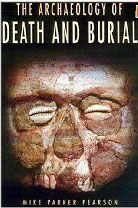
Death and Burial

The Archaeology of Death and Burial has been written by Professor Michael Parker Pearson.In Search of the Red Slave (the last in combination with his partner Karen Godden). He has carried out excavations in South Uist, Madagascar and at Durrington Walls as part of the Stonehenge Riverside Project.

The history and science of preserved bodies (co-authored with Andrew Chamberlain) range from the Paleolithic to the present day.

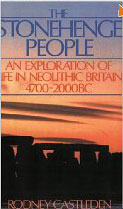
Stonehenge People

The Stonehenge people has been written by Aubrey Burl.His most generally held academic works are The Stone Circles of the British and The Stonehenge people, each of which is held in over 1300 libraries universal. He has received a volume edited in his honor. He has been called by The New York Times, "The leading authority on British stone circles”

It also provides a new interpretation of Stonehenge. Includes a greatly expanded gazetteer, and an up-to-date list of radiocarbon dates and recent excavations.

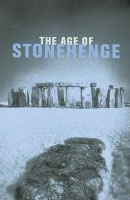
The Age of Stonehenge People

Book Name:The Age of Stonehenge book written by Colin Burgess .Complementary lifestyles are recorded by the isotope composition of Bronze Age Beaker people (c. 2500–2000 bc) from three funeral sites or near to the Stonehenge memorial in Wiltshire, southern England. Seven individuals (three adults, a sub-adult, two juveniles and an infant) were recovered from a single grave at Boscombe Down.

Did the first metal-workers in the British Isles know which raw materials made the best tools? Reconstructions of their methods show that their choice owed


Rich Resources on Amesbury Archer


                   + Latest Archaeology Updates  + Importance and applicability  + Famous Archaeologists  + Museums Collections
                   + World Heritage Sites  + World History Monuments  + Archaeological Organizations  + World Atlas of Archaeology
                   + Movies based on Archaeology  + Frequently Asked Questions  + Archaeological Resources  + Site Map
                   + Archaeological Abbreviations  + Articles based on Archaeology  + Gallery Collections  + Contact Us  + Tell a Friend
Copyright © Greatarchaeology 2010