The Pliocene and Pleistocene Epochs saw significant changes in the African continent. During the Pliocene, the landmasses of Africa had become largely delineated and the Sahara desert was beginning to form. The area of Africa south of the equator had become more wet due to changes in ocean and wind circulation. As a consequence of the increase in precipitation, animal and plant life flourished. The Pleistocene saw a significant shift in the climate of Africa, as the Sahara began to expand and the African savanna became much drier. This shift in climate resulted in a major change in the flora and fauna of Africa, as forests and woodlands gave way to more xeric savannas and grasslands.
The Pleistocene was also a time of migrations and exchanges of flora and fauna between Africa and other continents. This period saw the migration of hominins (our human ancestors) out of Africa into both Asia and Europe, as well as the spread of animals from Africa to other areas, such as the first horses to the Americas. The Pleistocene also saw the development of many Homo species in Africa, including Homo habilis, Homo erectus, and the beginning of Homo sapiens much later.
The Early Stone Age of Africa began with the production of the first stone tools by hominins (early human ancestors) around 2.6 million years ago. During this period, the human lineage split from the hominin lineage, and the first members of genus Homo appeared. The Early Stone Age of Africa is divided into three stages: the Lower Paleolithic, also known as the Early Stone Age (2.6 million-300,000 years ago), the Middle Paleolithic (300,000-45,000 years ago), and the Upper Paleolithic (45,000-12,000 years ago).
The Lower Paleolithic of Africa is characterized by the development and expansion of the earliest known Homo species, namely Homo habilis and Homo erectus.
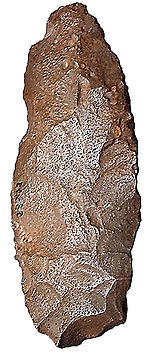
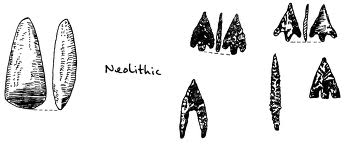
The Middle Stone Age of Africa, which is generally believed to have begun around 280,000 years ago and lasted until around 40,000 years ago, was characterized by major advancements in the development of stone tools. Primitive flake tools based off of cores made from brittle materials such as quartz, quartzite, or even high-quality chert were used during this period. These tools were better than those of the preceding Acheulean industry, consisting of larger, more sophisticated blades and points.
The sophistication of Middle Stone Age toolkits is evident in the evidence collected from excavations of hunter-gatherer camps. In addition to a wide variety of cutting tools, many of these sites have contained scrapers, borers, and anvils.
Top 6 Books on the Archaeology of Africa:
African Archaeology , written by David W. Phillipson, is a comprehensive study of the continent's archaeological resources. In this third edition, Phillipson provides an up-to-date overview of the major archaeological sites and regions of Africa, tracing the continent's prehistory from the earliest human ancestors to more recent times.
Digging through Darkness is a novel by Carrie Alvaro. It is a young adult urban fantasy set in a modern world. The story follows a teenage girl named Skye as she discovers the hidden power in her blood that allows her to wield a unique form of magic known as Shadow Magic. With the help of her friend Dig and a mysterious outsider named Raven, Skye must learn to control this power as she is caught in a deadly and thrilling battle of life and death between ancient enemies.
The First Human: The Race to Discover Our Earliest Ancestors,The First Human is a groundbreaking exploration of the origins of humanity, tracing our evolution with scientific precision through evidence gleaned from fossils, DNA, and archaeological discoveries. On his quest to discover our earliest ancestors, paleontologist Lee Berger carefully gathers clues from multiple archaeological sites across the world, revealing the stories of our long-gone forebears.
The Rise and Fall of Swahili States, is a book written by John Middleton and Roland Oliver which focuses on the history of trade and politics in the Indian Ocean region during the Middle Ages. The book discusses the rise and fall of Swahili cities, the influence of foreign powers on the Swahili states, and the role of religion and culture in the politics of the region.
Making History in Banda,is a project that seeks to bring members of the Banda community together to build a sense of collective identity and belonging within the community. It works to foster connections between local organizations, civic leaders, business owners, and individuals from all backgrounds to create a shared vision for the future of the Banda district.
The Berbers are an ethnic group native to North Africa. They are distributed throughout Morocco, Algeria, Tunisia, Libya, Mauritania, Niger, Mali and the Canary Islands. Historically they have been referred to by many names, including Amazigh, which broadly translates as
"free people." They are a predominantly rural people, with the majority of their population living in semi-arid areas, such as the
Atlas Mountains and Sahara Desert.